
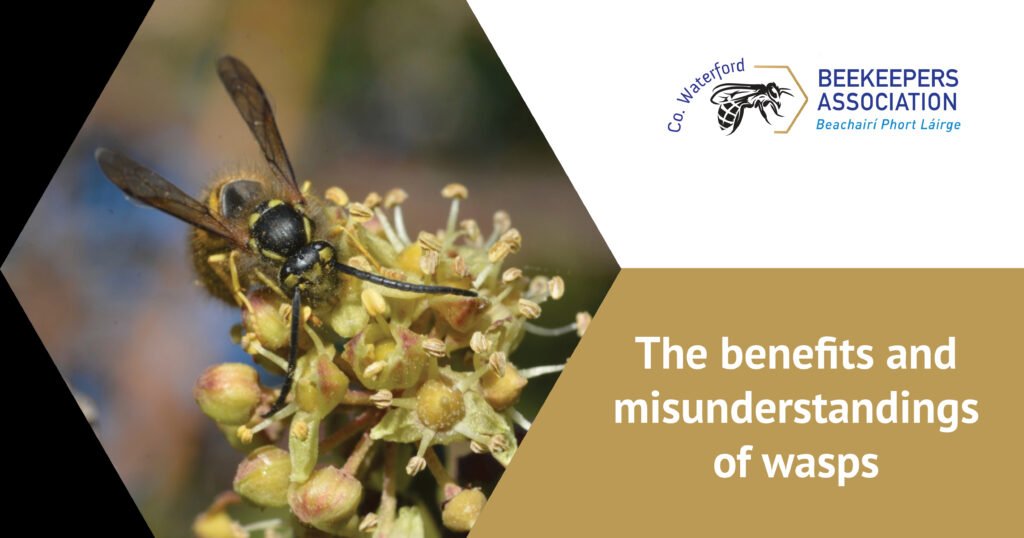
Late July/August: this is the time of year when the public takes note of an increase in the number of wasps coming into their homes. Queens have ceased their laying and mated queens are looking for safe crevices, roofs, even roofs of beehives, in which to spend the winter months in hibernation, before emerging in the spring time to start their nests.
The main populations of wasps are now dwindling and with no brood to feed, and reduced sources of nectar, wasps are hungry and in search of sugar stores on which to feast. The common reaction by most is to draw wasps to a sugar source, such as a jam jar with some jam in it, and water in the bottom third of the jar….hoping the wasps investigating same end up in the water, to drown.
However, wasps have an important role to play and are beneficial to ecosystems. They are a valuable friend to gardeners because they control insect populations, At the start and into the summer season, wasps rely on mainly a protein diet to feed the young larva in their nests. To ensure adequate sources of protein, wasps tend to rely on the many garden pests, so disliked by gardeners, aphids, green fly etc. In general, wasps eat nectar, honey, fruit small insects and plants etc. Many of us are not aware of this fact, as our focus is on the wasp itself due to its impressive sting, and the pain resulting from same.
A wasp can regenerate it’s sting within 20 minutes of using it. A honey bee will die after using its sting. This is because of the barbed end of a bee’s which remains along with some of the bees abdomen along with the venom sac, as it departs after using it’s defence weapon.
A honey bee stinging and leaving its sting as it departs.
A wasp sting differs in that it can withdraw its sting and will regenerate it after about twenty minutes. The pH or acidity of the stings also differs and so the advice to put vinegar on a wasp sting and bread soda paste on a bee sting. It is important that one scrapes the bee sting from the skin as soon as possible to reduce the amount of bee venom injected from the pulsing bee sac left with the sting. Use a finger nail or hive tool to scrape it to the side. Squeezing the venom sac to remove the sting will ensure that more venom is deposited before removal of the sting. Garlic juice or a cut garlic bulb rubbed on a sting is also useful to reduce pain and swelling and the itch that comes the day after.
The Architecture of the Wasp nest.
One must admire these impressive insects and the workmanship that goes into their nest construction; strong enough to hold thousands of their young, yet paper thin and easily disintegrates when no longer in use.
The photo below shows a wasps nest that was constructed around tree branches, to ensure it would remain in situ, in spite of wind and rain and other unforeseen circumstances. This nest had to be transferred due to it’s proximity to a house and young visitors.


Delicate discussions on how best to move the nest without it breaking and releasing it’s population of wasps. The tree branches holding it firm would have to be cut; this was a two person operation. It was important to ensure that the queen wasp was moved with the nest, otherwise she and the remaining wasps would have rebuilt their nest and repopulated the spot with more wasps.
These photos show West Waterford GP Dr. Stacey, assisted by a Co. Waterford beekeeper, to transfer a wasp nest to a location where it’s population would not longer be a threat to humans. He was ably assisted by his young grandson, who was very knowledgeable about the threat of Asian Hornet, and the risk posed by this predator to honeybees and other native pollinating insects should it become established here in Ireland.
To see such a knowledgeable young man was truely heart warming, but then in this case, like grandfather like grandson perhaps!
Job done, wasps in transportable bag on the way to their new home…..time for a cup of tea now!
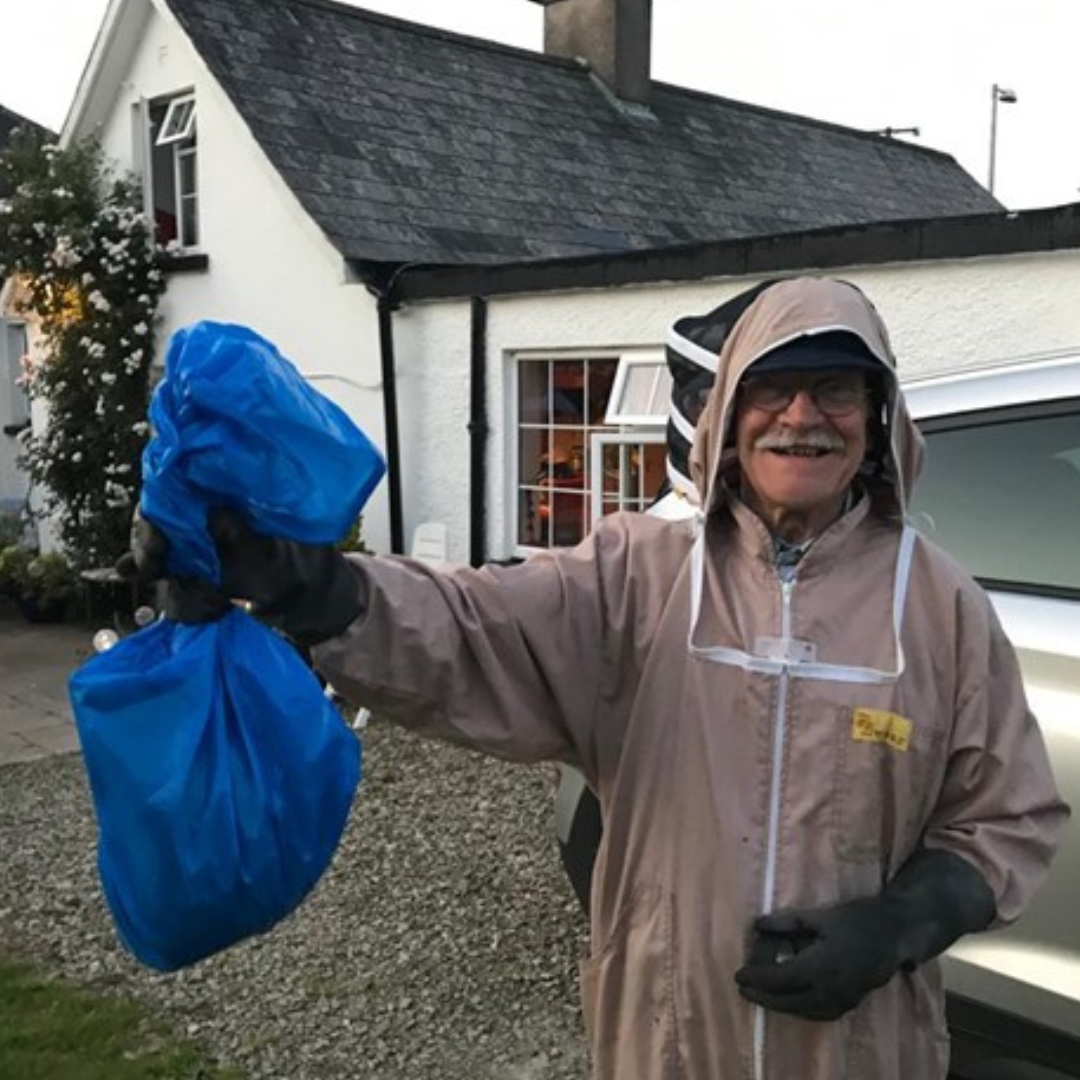
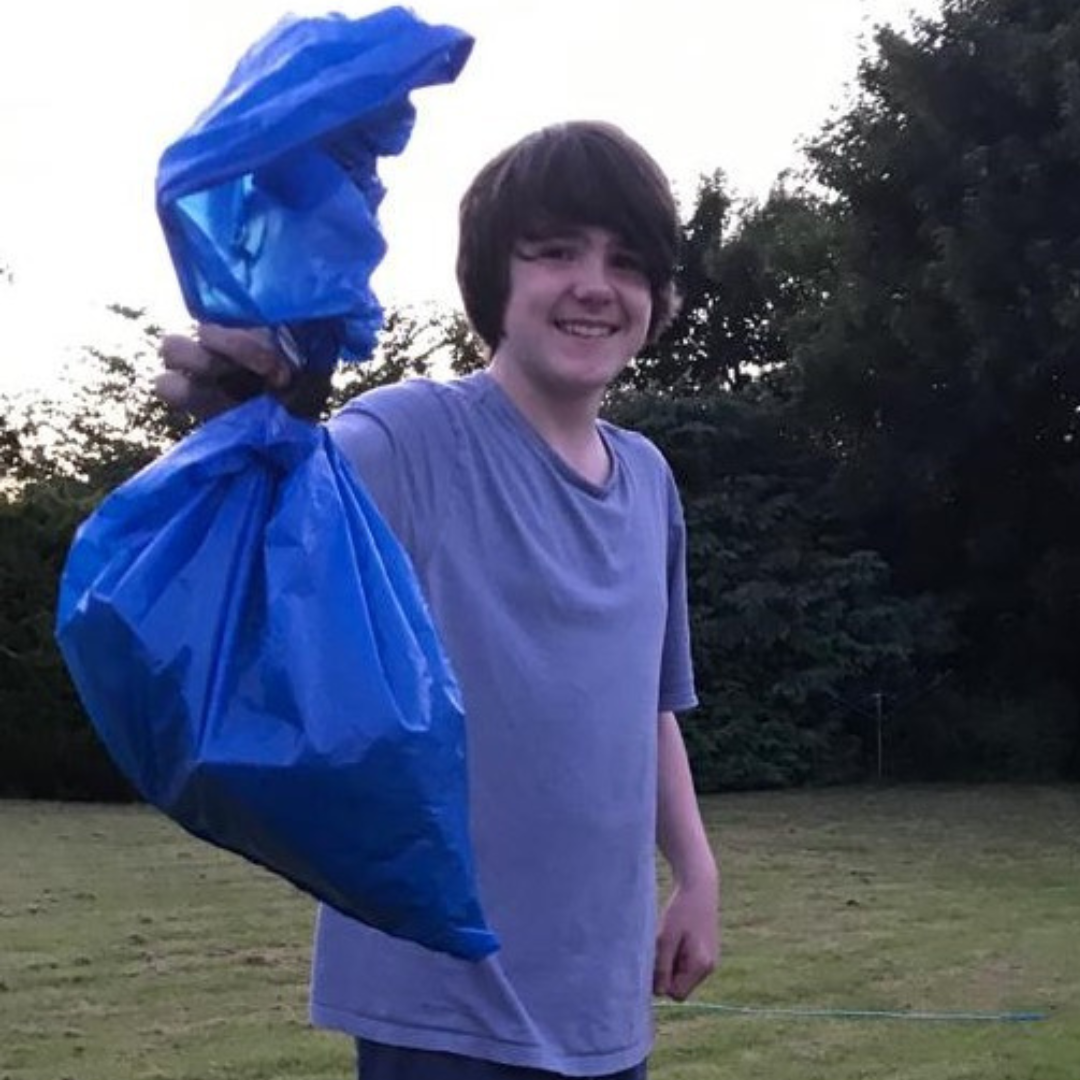
Dr. Stacey well protected in a bee suit about to transport the wasps and nest to their new home. Well, this young man did not need a bee suit as he transferred the nest and occupants to their new forever home.
Wasp catcher and knowledgeable expert on the Asian Hornet, also called the “Yellow Legged” hornet, this young man is only too aware of the danger posed by this predator, whose arrival is expected, in the near future.