Autumn 

It is claimed that the beekeeping year starts in Autumn, when the honey crop has been removed and beekeepers ensure that the colonies have enough stores to take them through the long Irish winter, until spring, when days are warmer longer.  

Beekeepers check that the hives are all waterproof and tied down to withstand the rain and winds of the Irish winters.

All varroa treatment is completed, to ensure that the mite load in each colony is low, heading into the winter.  
Beekeepers ensure that each colony of honey bees is headed up by a young healthy queen, which has been well mated, to ensure a well-populated colony to over winter.

October/November – Annual beekeepers’ harvest meal

October/November is the annual beekeeper’s Harvest Meal out.  After the busy summer, and processing the honey crop, it is a lovely downtime, to catch up with friends, exchange information, and find ways of perhaps doing it better.
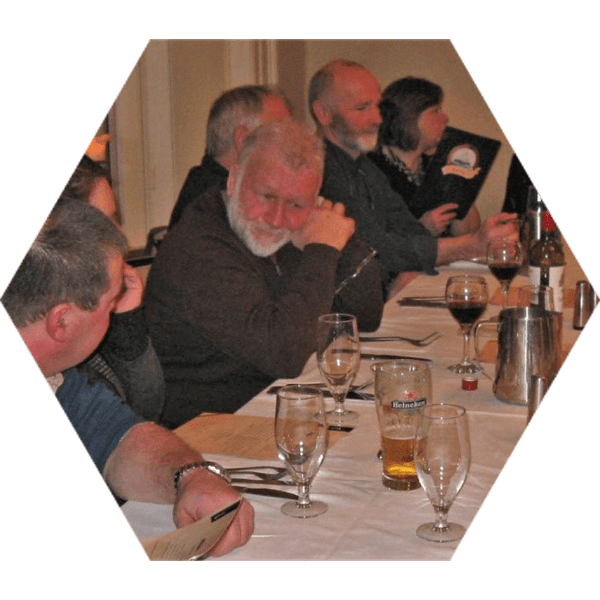
Annual beekeepers harvest meal out

Upstairs in The Moorings, 2015, beekeepers exchanging ideas
and knowledge with each other.
Following Covid, the Co. WBKA resumed its annual meal out in 2022
and we look forward to a bigger crowd in 2023.

November is AGM time.  

At our AGM in 2022, the threat of Asian Hornet was discussed with the following motion passed.

The following MOTION was passed unanimously. That this AGM acknowledges the danger posed to Irish honey bees and native pollinators by Vespa Velutina, the Asian hornet.  This AGM urges DAFM officials and the Government, and Waterford City and County Council, along with other local authorities, 

  1. To immediately embark on a public awareness campaign.  Such a campaign will help to ensure that when fertilised queen Asian hornets arrive here, and it is only a matter of when they do, they may be more quickly and correctly identified, and consequently, may be prevented from establishing secondary nests and becoming established here, as they have in Europe, and the Channel islands etc.
  2. That beekeeping groups around the country be formed into Asian Hornet action groups, primed to act appropriately when an Asian Hornet is spotted.  (This has worked successfully in the UK and Jersey. Existing networks such as the IBA and NIHBS, FIBKA and the UBKA could be used for networking for this purpose.)
  3. That this AGM requests that the Irish Beekeepers’ Association CLG, take the lead on this and contact other beekeeping organisations and the DAFM, to put such a network into being.
 

Spring

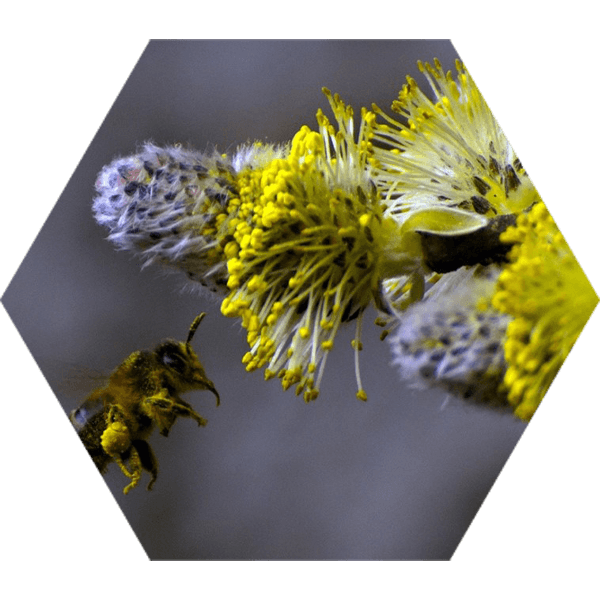
In spring, the first plants, dandelion and Willow tree provide initial forage for our bees and pollinators. Hence the request that gardeners not mow their lawns and to allow the dandelion and other plants to flourish and provide nurture for pollinating insects.

February – Beginners Course in Beekeeping

February is when the Co. WBKA holds its Beginners Course in Beekeeping. This is also the time for our Beginners’ Beekeeping Course, which is held each year at Dungarvan College.  The course is taught by experienced Beekeepers, some of whom are qualified from the National University of Ireland, Galway during Covid, with Diplomas qualifying them to provide Adult Education.

The classes which are run over 6 weeks, culminating with participants attending the Association Apiary, having the opportunity to meet with honey bees, under the watchful eye of their mentors.  Two visits to the Association Apiary are part of the Beginners’ Course, run in partnership with the Waterford Educational Training Board, at Dungarvan College.

Apis mellifera mellifera

One of our Native Irish honey bees, Apis mellifera mellifera,
working a Willow tree in a garden in Dungarvan.

Willow pollen is one of the first sources of pollen,
ie. protein for bees and pollinators after the long winter.

March – National Tree Week

Each year, the Irish Beekeepers’ Association CLG, ever mindful of the beneficial role of trees for honey bees, arranges the supply of native Irish trees, donated by Coillte, to members around the country.  Affiliated associations on the ground ensure that the trees get to members and others in their localities.  

In 2023 beekeepers took delivery of approximately 500 trees to plant for National Tree week.

Thanks to Coillte, the National Tree Council of Ireland, and the Irish Beekeepers’ Association clg for arranging the Trees for Bees Schemel.

Summer

May, June, July and August – Swarming

May, June, July, and August bring the busy time of year for beekeepers when we need to work with the bees and their instinct to swarm. Swarming is how bees make increases and populate. Beekeepers need to do regular colony inspections to ensure that their bees do not swarm. If this happens they lose the workforce of bees that will forage during the main nectar flow, from the blackberry and white clover, from which the main honey crop derives.

Likewise, beekeepers serve the public by removing swarms before they take up residence on a roof or elsewhere where they can become a nuisance to the public or/and livestock.
August is when the honey crop is removed and the bees are treated for varroa mites. Honey is extracted and prepared for sale or home use depending on the beekeeper.

August and…

The start of another year and the cycle starts all over again…..

the swarm being taken in a skep by a member of the Co. WBKA. Customer and staff member, watch the bees following the Queen to the skep before being moved to their new forever home out the country.